


Apple reported record fourth-quarter revenue in its first earnings announcement since John Ternus took over as CEO. Stronger iPhone and Mac sales, combined with product price increases, helped offset rising costs caused by surging memory prices. However, continued increases in memory prices, along with supply shortages and quality issues involving its first foldable smartphone, the iPhone Duo, have emerged as potential risks to year-end earnings.John Ternus, CEO of Apple
Apple reported revenue of $114.5 billion (approximately KRW160 trillion) for the fourth quarter of fiscal 2026, covering July through September, on Nov. 2 (local time), up 12% from a year earlier. The figure marked an all-time high for the quarter. Gross margin stood at 47.9%, while earnings per share (EPS) reached $2.10, an increase of 14% year over year.
The results marked the first quarterly earnings report released since Ternus became CEO on Sept. 1. Although July and August of the quarter fell under the leadership of his predecessor, Tim Cook, the results included Ternus' first month in charge.
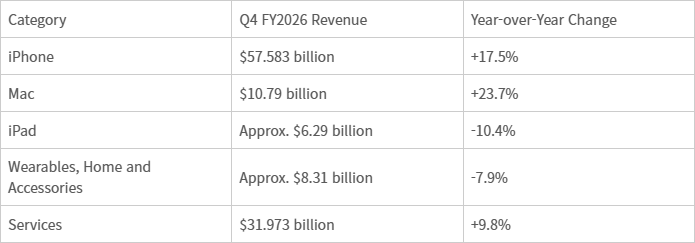
The iPhone was the main growth driver. iPhone revenue rose 17.5% year over year to $57.583 billion (approximately KRW77.1439 trillion), setting a new record for the September quarter. Mac revenue also increased 23.7% to $10.79 billion (approximately KRW14.4553 trillion). In contrast, revenue from the iPad and the Wearables, Home and Accessories category declined.
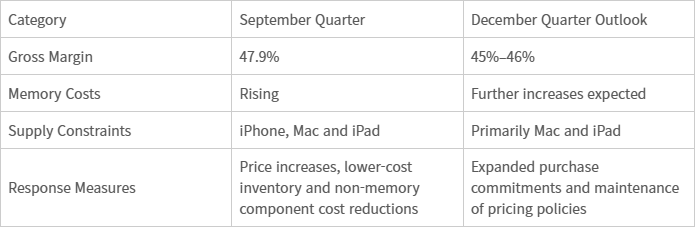
Apple's ability to maintain profitability despite rising memory prices was attributed to product price increases and the benefits of existing inventory. The company raised prices for Macs and iPads in late June and for iPhones in September. Relatively inexpensive memory inventory secured earlier, along with cost reductions for non-memory components, also helped ease cost pressures. The September quarter's gross margin additionally benefited by approximately 1 percentage point from tariff refunds.
The challenge lies ahead. Apple projected a gross margin of 45% to 46% for the December quarter. Excluding the impact of tariff refunds, the midpoint of the guidance represents a decline of approximately 1.4 percentage points from the previous quarter, with higher memory costs expected to account for most of the decrease. During the earnings conference call, Ternus described the recent rise in memory prices as “unprecedented.”
To secure supply stability, Apple increased its manufacturing-related purchase commitments by $33 billion as of the end of September compared with the end of June. The company also expects supply constraints caused by memory shortages to persist for Macs and iPads during the December quarter. Cloud inference costs associated with increased use of Siri AI will also be reflected in the cost of services revenue.
Another variable affecting year-end earnings is the iPhone Duo. Launched last month, the iPhone Duo was not included in the September quarter's results. Apple said initial demand has exceeded supply and that production expansion is progressing smoothly.
However, issues involving the internal display have been reported in some units. “We are aware of an issue affecting the internal display in a small number of iPhone Duo devices,” Ternus said, adding that the company would replace affected products. Apple did not disclose the specific cause of the issue or the number of units affected.
Apple expects total revenue for the December quarter to increase 7% to 10% year over year.