



Uncertainty is growing over a U.S. AI infrastructure venture backed by six Samsung affiliates, including Samsung Electronics.
As political uncertainty surrounding AI data center development intensifies around the U.S. midterm elections, a key power supplier investing alongside Samsung has confirmed a delay in its funding plans.
The shift introduces uncertainty over power availability—a prerequisite for AI data center development—and project timelines, potentially affecting follow-on business opportunities for Samsung affiliates.
U.S. power company Vistra said during its third-quarter earnings call earlier this month that it now expects to fund its investment in Helix Digital Infrastructure in 2027 rather than this year.
“The political environment has slowed some business activity across several markets,” Vistra CEO Jim Burke said. “We now expect the actual capital contribution to Helix to take place next year, later than originally anticipated.”
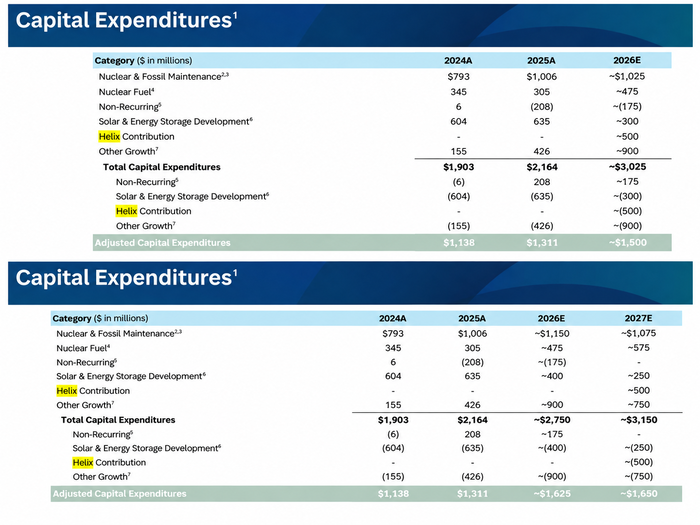
Vistra's second-quarter earnings materials, released in August, included approximately $500 million for its Helix investment in this year's capital expenditure plan. That amount was removed from the 2026 forecast in its third-quarter materials and added to projected capital spending for 2027, pushing the expected funding date back within just three months.
The timing of Vistra's contribution is closely tied to when Helix's projects move forward. Vistra, a major independent power producer with natural gas, nuclear and other generation assets across the United States, serves as Helix's preferred power supply partner. The delay signals a slower pace of development from a major investor responsible for securing the electricity essential to AI data centers.
Helix is an AI infrastructure investment platform established in June by global private equity firm KKR. Samsung Electronics, Samsung C&T, Samsung SDS, Samsung SDI, Samsung Life Insurance and Samsung Fire & Marine Insurance have committed a combined $1 billion to the platform. Vistra's $1 billion commitment, by contrast, includes an additional $500 million contingent on its power supply business using existing generation assets meeting certain conditions.
If Helix's integrated data center and power development projects slow, uncertainty will also increase over when Samsung affiliates can expand related businesses, including equipment supply and engineering, procurement and construction (EPC) services. KKR, which manages the investments, has not disclosed how much capital has actually been contributed to or deployed by Helix. During its third-quarter earnings call on November 9, KKR acknowledged the potential for market volatility following the U.S. midterm elections but said it would maintain its long-term investment approach.
Samsung's investment in Helix goes beyond financial returns. It is part of a broader strategy to expand its affiliates' businesses across AI infrastructure. Samsung Electronics' Device eXperience (DX) division, in particular, is using its acquisition of FlaktGroup to extend its existing heating, ventilation and air conditioning business into AI data center cooling. The Helix investment was expected to help broaden the customer base for that business. Samsung C&T has also committed $200 million to Helix and is exploring opportunities to participate in a large-scale AI data center project in Texas.
“Political uncertainty in the United States is indeed delaying previously planned investments across several markets,” an industry source said. “The pace of actual capital deployment is likely to be adjusted.”
