









Requests evidence data from tier-1 vendors
Some equipment companies request 3-4% increase
Expectations rise for 'trickle-down effect' of semiconductor profits
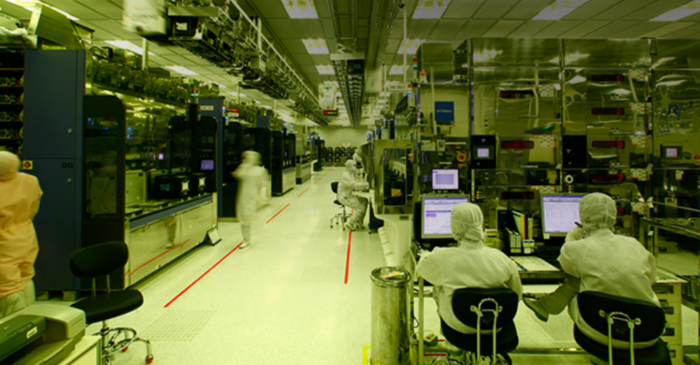
SK Hynix is reviewing measures to increase the supply price for its partner companies. This comes as suppliers requested price hikes following the company's record-high quarterly operating profit driven by the high bandwidth memory (HBM) boom. Expectations are growing for the so-called “trickle-down effect,” where profits earned by major corporations extend to their cooperative partners.
According to industry sources on June 10, it was identified that multiple tier-1 equipment suppliers of SK Hynix recently requested a 3% to 4% increase in supply unit prices. In response, SK Hynix was confirmed to have requested “unit price adjustment review data (evidence materials for price increases).”
While unit price increase negotiations occasionally occur for materials or components that experience high fluctuations in cost, it is evaluated as unusual for equipment companies to request price hikes.
For material companies, raw material costs (chemical substances, gas, wafers, copper, etc.) account for a large portion (30% to 70%) of the supply price, and international raw material price fluctuations can be directly and clearly tracked, making the application of an indexation system relatively easy.
On the other hand, for equipment companies, most of the unit price centers on fixed costs, development costs, and technological capabilities, making it difficult to apply simple indexing such as “raise the unit price because raw materials have increased.” Rather, the price is typically highest at the time of the initial supply, and it is customary to cut the supply price by about 10% whenever additional introductions are discussed.
In the case of Company A, a tier-1 vendor equipment firm, it is known to have recently supplied equipment to SK Hynix at a higher price compared to the previous year. Although there had been no supply price increase for the past five years, negotiations this year were smooth.
An official from the equipment industry said, “The recent boom in semiconductors is mainly due to an increase in supply unit prices caused by a memory shortage. With the exception of some new investments, there are cases where the profitability of materials, components, and equipment partners has actually worsened because their unit prices remained unchanged.” The official added, “In addition, oil price hikes due to the Iran war and the prolonged high exchange rate create a situation where a unit price increase is necessary.”
The move by conglomerates to increase equipment unit prices is interpreted as a result of the growing impact that core equipment suppliers' delivery dates and responsiveness have on semiconductor production plans amid the semiconductor super-cycle.
SK Hynix broke its quarterly record performance in the first quarter of this year, achieving sales of 52.5 trillion won, an operating profit of 37.6 trillion won, and an operating profit margin of approximately 72%. Compared to the first quarter, which is a seasonal off-peak period, the operating profit in the second quarter is projected to increase to the level of 60 trillion to 64 trillion won, forecasting a significant growth.
An official for SK Hynix explained, “As the burden of raw material supply and demand grows, requests for unit price increases from partner companies are rising.” The official added, “We will determine the unit price according to objective purchasing principles such as exchange rates and supply-demand stability.”
Some circles interpreted that this recent trend is not unrelated to political pressures centered around political circles urging “mutual growth and cooperation” on SK Hynix and Samsung Electronics. The government is raising its level of pressure as it reviews measures to attract a Samsung Electronics semiconductor factory to the Honam region.
