








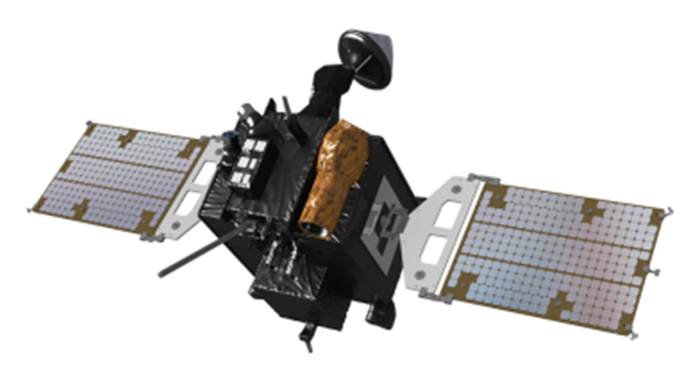
South Korea's lunar orbiter 'Danuri' captures the collision of SpaceX rocket debris, which has been drifting in space for over a year, with the Moon's surface. This marks the first case of analyzing changes caused by a collision between the Moon and rocket debris, drawing attention to whether international norms for addressing the 'space debris' issue will be expedited.
The Korea Aerospace Administration (KASA) announced on the 3rd that the upper stage of SpaceX's Falcon 9 rocket is scheduled to collide with the lunar surface near the Einstein Crater at 3:34 PM on the 5th, and South Korea's lunar orbiter 'Danuri' will observe the collision before and after the event.
The rocket upper stage was left behind after launching the U.S. space company Firefly Aerospace's lunar lander 'Blue Ghost' and others into space on January 15 last year. After completing its mission to place the lunar lander into orbit, the rocket stage was abandoned and drifted between the Earth and Moon's gravitational fields before colliding with the lunar surface.
KASA estimated that the approximately 4.9-ton rocket upper stage, falling at a speed of 2.43 km/s, would form a crater measuring 20-30 meters in diameter. Danuri will pass over the collision site three times, capturing images before and after the impact using its high-resolution and polarimetric cameras. Danuri has completed pre-collision observations of the expected impact site. However, it will not be able to capture the collision itself as it will be on the far side of the Moon at the time of impact.
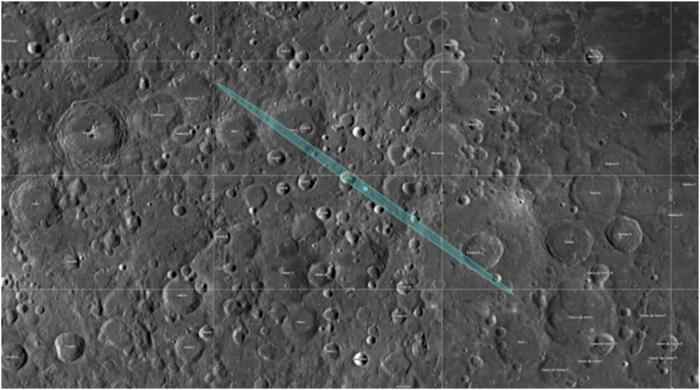
The data collected by Danuri will be made public once analysis by relevant research institutions is completed. The data will be used to establish follow-up impact zone imaging plans for NASA's lunar orbiter and for international collaborative research. It is expected to provide insights into how lunar surface materials change under strong impacts.
KARI Director-General Oh Tae-seok stated, “This observation is a critical opportunity to study lunar surface changes and impact mechanisms,” adding, “Through Danuri and international collaborative observations, we will strengthen our capabilities in lunar exploration and space environment research, and continue to expand opportunities for international cooperation.”
The international community emphasizes the need for attention to space debris monitoring and disposal systems amid the Moon's rise as a key hub for space exploration. In 2022, debris from a Chinese rocket collided with the far side of the Moon, creating two craters. While the Falcon 9 impact left only localized traces with minimal effects on the entire Moon, it may spark debates about the degradation of the “pristine” lunar surface.
Under current international space law, there is no basis for raising issues or imposing sanctions regarding this collision, nor are there international norms mandating the disposal of rocket upper stages orbiting the Moon. SpaceX, responsible for this collision, sent the upper stage of its November 2022 launch into a heliocentric orbit—effectively moving the debris farther away rather than retrieving it.
Scientists have advised improving debris monitoring and traffic control systems before more robots and astronauts gather on the Moon. According to the European Space Agency (ESA), there are over 40,000 pieces of space debris larger than 10 cm.
Benjamin Fernando, a researcher at Los Alamos National Laboratory in the U.S., said, “One reason for the interest in this collision is to understand how much risk debris impacts could pose to future astronauts.”
