








Air import transport costs from the United States surged to a record high in June. While air freight rates from the European Union (EU), which had soared since the beginning of this year, turned downward, rates from the U.S. are accelerating their upward momentum instead. Concerns are growing that logistics cost burdens for domestic retailers importing American goods could increase further.
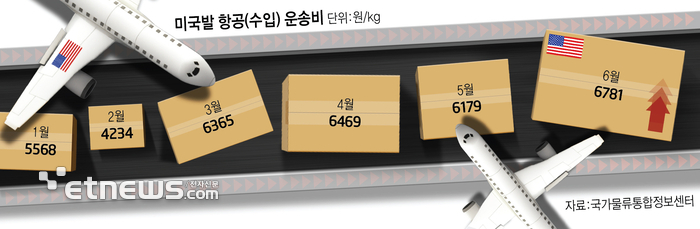
According to the National Logistics Information Center on Aug. 12, air import transport costs from the U.S. reached KRW6,781 per kilogram in June. This is a 9.7% increase from KRW6,179 in the previous month. Compared to KRW5,074 in June last year, it rose 33.6%.
Freight rates from the U.S. shot up from KRW4,234 in February to KRW6,365 in March, before recording KRW6,469 in April and KRW6,179 in May. In particular, June marks the highest monthly rate recorded in recent years.
On the other hand, the rapid rise in rates from the EU has cooled down. Rates from the EU, which soared to KRW7,596 per kg in April, fell to KRW7,121 in May and then to KRW5,843 in June. They dropped 17.9% in a single month and are 23.1% lower compared to the April peak. This is analyzed as the effect of supply chain schedules being readjusted as global shipping lines secured stable alternative sea routes, such as detouring around the Cape of Good Hope.
However, the rise in U.S. freight rates appears to be driven by a combination of ongoing uncertainties surrounding transit through the Strait of Hormuz and increased demand for air cargo. As geopolitical tensions in the Middle East persist and reduce the stability of maritime transport, some shippers are shifting their volumes to air transport.
In addition, as direct e-commerce purchases expand alongside an increase in corporate import volumes, competition to secure limited freighter cargo space is intensifying. Fuel surcharge burdens resulting from rising international oil prices are also acting as upward pressure on freight rates.

Domestic retailers are bound to be particularly sensitive to the rise in U.S. air freight rates. Fresh food and premium ingredients among imported products, which depend heavily on air transport due to short shelf lives, took a direct hit. For example, American fruits such as cherries and oranges must bear expensive air freight rates because supplies need to be brought in on time due to freshness maintenance and inventory management characteristics.
Furthermore, trend-sensitive American beauty products, health functional foods, and business-to-business (B2B) import items are also expected to find it difficult to avoid rising logistics costs. Consequently, there is a high probability that retailers' margins will shrink or lead to price increases for consumers.
An official from a major supermarket chain said, “Price burdens for imported food items are increasing due to rising logistics costs, high exchange rates, reduced supply volumes, and changes in the international situation,” adding, “We plan to actively respond to market volatility by promoting strategies such as diversifying procurement sources for major imported goods and expanding long-term storable products.”
