






Samsung Electronics is expanding its Galaxy Watch lineup beyond blood-pressure and ECG readings, positioning the wearable as a broader digital-health platform that can flag potential heart-health concerns, help families monitor shared health data, and eventually support research into noninvasive glucose monitoring.
The company said the Galaxy Watch and Samsung Health are evolving from tools that measure individual biometrics into services that analyze daily health data—including sleep, activity levels, vascular stress, and body composition—to provide a more comprehensive view of cardiovascular health.
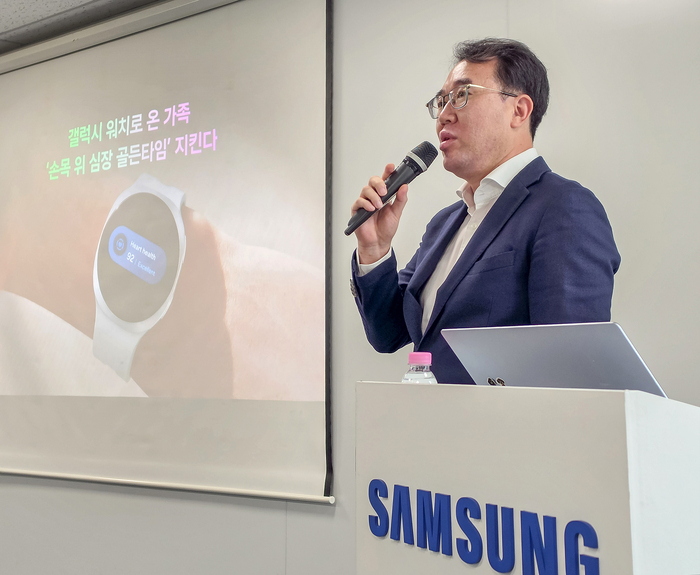
Samsung introduced its latest heart-health technologies and future digital-health strategy at a media briefing on Sep. 9, ahead of World Heart Day on Sep. 29, which is designated by the World Heart Federation. The company highlighted the role of wearables in preventive, data-driven health management.
Samsung has been developing wearable health-monitoring technologies since introducing optical heart-rate sensors, known as PPG sensors, in the Galaxy S5, Gear 2, and Gear Fit in 2014.
In 2020, Samsung Health Monitor, an app offering blood-pressure and electrocardiogram (ECG) measurements, received medical-device approval from South Korea's Ministry of Food and Drug Safety. In 2021, Samsung introduced its BioActive Sensor—which combines PPG, ECG, and bioelectrical impedance analysis (BIA) sensors—in the Galaxy Watch4.
In 2023, Samsung's Irregular Heart Rhythm Notification feature, designed to detect signs consistent with possible atrial fibrillation, received clearance from both the U.S. Food and Drug Administration and South Korea's Ministry of Food and Drug Safety.
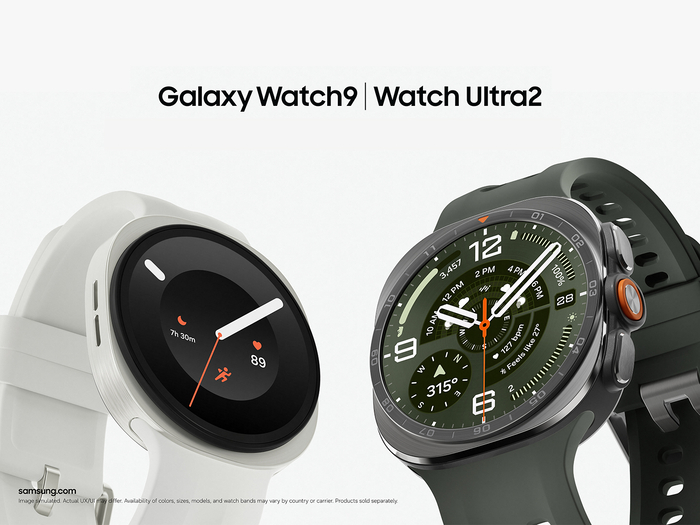
More recently, Samsung has shifted toward combining multiple health indicators rather than reporting individual biometric readings alone. The Heart Health Score, available on the Galaxy Watch Ultra2 and Galaxy Watch9, analyzes sleep, activity, vascular stress, and body-composition data to provide users with an overall score and lifestyle-management guidance.
Samsung also shared cases in which wearable alerts prompted users to seek medical care. According to the company, a Galaxy Watch user in Jordan visited a hospital after receiving an irregular heart-rhythm alert last year and was diagnosed with atherosclerosis before undergoing treatment. In Brazil, another user who repeatedly received “inconclusive” ECG results visited a hospital and learned of a potential risk of myocardial infarction.
The company is also expanding health management to families. With user consent, Samsung Health can link family profiles and Samsung accounts, allowing selected health information—including heart rate, blood pressure, sleep, glucose data, medication records, and other vital signs—to be shared among family members.
The feature could allow adult children living apart from their parents to monitor health trends remotely, contact them when unusual changes appear, or encourage them to seek medical care.
Samsung is also studying opportunities in glucose and metabolic health. As the continuous glucose-monitoring market grows and interest in noninvasive CGM technologies increases, the company said it is broadly reviewing relevant technologies overseas, given the close relationship between blood-glucose levels and metabolic disease.
The company is also developing more advanced fitness features as running participation grows, with a focus on practical real-time functions such as pace management during workouts.
“Wearing the Galaxy Ring and Galaxy Watch together can significantly improve sensor-measurement accuracy,” said Choi Jong-min, Executive Vice President of Samsung Electronics' Digital Health Team within its Mobile eXperience division. “By connecting the Watch, Ring, smartphone, and Buds, we will continue building a more advanced, personalized AI healthcare environment.”