





Samsung Electronics is reshaping its strategy for Europe's commercial display market around security. In digital signage—display systems used to deliver advertising and information—the company is looking beyond hardware specifications such as screen size and brightness to make trust a new competitive priority alongside its software and systems partners.
Samsung will hold “In:Security 2026,” a conference for its European partners, in Frankfurt, Germany, in mid-October. A regional security event dedicated to a specific product category is an unusual move for the company. It reflects Samsung's view that signage security is becoming a purchasing requirement rather than an optional feature.
The conference will focus on the changing threat landscape, regulatory compliance and secure device management. Samsung plans to explain how its Tizen operating system, Knox security platform and commercial display solutions help protect digital signage. The emphasis will be on end-to-end security spanning hardware, operating systems, content management systems (CMS) and remote management, addressing European customers' demands for transparency and reliable operations.
Traditional signage systems typically operated on closed networks, with security features added to existing setups. Next-generation signage is different: displays, operating systems, cloud platforms, content management systems and AI services are interconnected. Advertising screens have effectively become endpoints within corporate IT infrastructure. As connections multiply, a single weak link can provide an entry point into the wider network, making the displays themselves targets for hackers.
The threats are also intensifying. AI-powered cyberattacks are growing in both sophistication and scale.
In April last year, pro-Palestinian messages appeared on menu boards and drive-through screens at about 300 locations of Canadian chicken chain Mary Brown's. The attackers reportedly gained access through an external signage provider's systems. In October last year, bus stop displays in Los Angeles showed a false warning telling people to evacuate immediately because of a suicide-bombing threat, instead of displaying arrival times. LA Metro said a third-party vendor's content management system had been compromised. Another prominent incident occurred during then-U.S. House Speaker Nancy Pelosi's visit to Taiwan in 2022, when screens at railway stations and 7-Eleven stores displayed messages criticizing her visit.
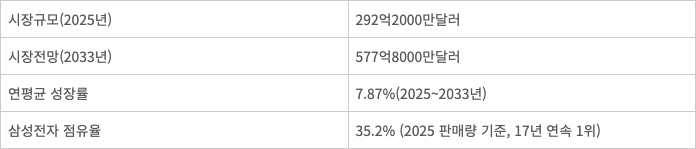
Despite these threats, the market continues to expand. According to market research firm Research and Markets, the global digital signage market is projected to grow from $29.22 billion in 2024 to $57.78 billion in 2033, representing a compound annual growth rate of 7.9%.
Samsung is a leading player in digital signage. According to Omdia, the company ranked first in the commercial display market for the 17th consecutive year last year, with a 35.2% share by unit sales. Annual sales exceeded 2.5 million units, setting a company record. With Tizen, Samsung has helped drive the adoption of system-on-chip (SoC) signage, which runs without a separate media player.
“The signage market is growing, but there is still too little sharing of information about security architecture among independent software vendors that develop content management software, systems integrators that install and connect equipment on-site, and hardware suppliers,” an industry official said. “Regulatory and certification requirements are tightening, particularly in Europe, while customers are increasingly asking how vulnerabilities will be addressed and who will be responsible when incidents occur. Security is set to become a key procurement requirement.”