





Major South Korean tertiary hospitals boasting “nation's first and only” specialized centers are rapidly expanding patient intake, multidisciplinary collaboration, and clinical research following their launches.
According to industry sources on Oct. 18, flagship centers at Asan Medical Center, Hallym University Kangnam Sacred Heart Hospital, and Ewha Womans University Medical Center are driving medical innovation through initiatives ranging from embedding artificial intelligence (AI) into diagnostic hardware to spearheading national clinical cohorts and building industry-academia platforms.
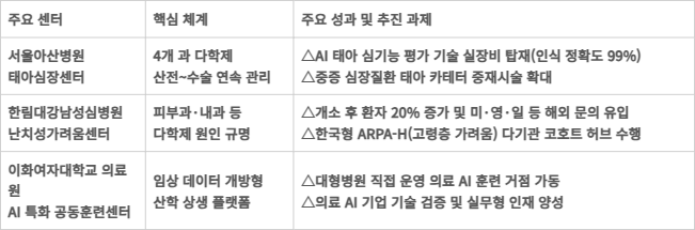
Asan Medical Center's Fetal Cardiac Center has built a continuous care ecosystem that unites obstetrics, neonatology, pediatric cardiology, and pediatric cardiac surgery. Drawing on an institutional track record of over 100,000 detailed fetal echocardiograms and 1,575 high-complexity fetal interventions, the center provides integrated management extending from prenatal diagnosis to delivery and immediate postnatal surgery.
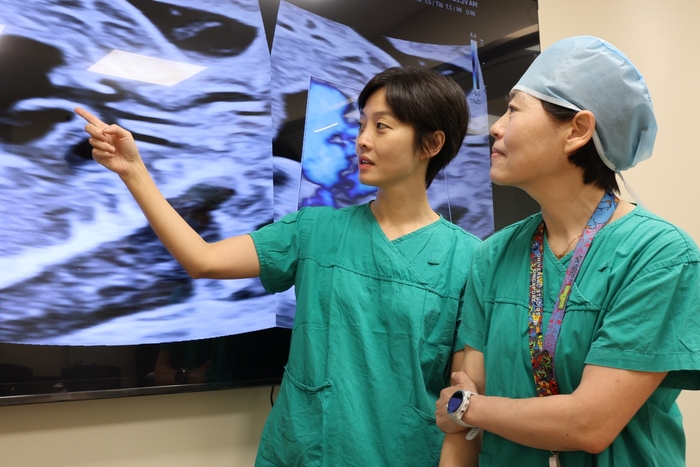
At the core of the center's clinical edge is proprietary AI technology integrated directly into ultrasound systems. Developed by an obstetrics research team led by Professors Won Hye-sung and Lee Mi-young using big data and deep learning, this prenatal fetal cardiac assessment tool automatically identifies 10 standard cardiac planes, highlights 26 key anatomical landmarks, and measures 43 cardiac biometrics in real time.
Boasting a view-recognition accuracy exceeding 99% and an automated measurement success rate of 98%, the platform enables earlier detection of congenital heart defects and refines treatment planning while significantly minimizing inter-operator variability and manual measurement burdens.
Hallym University Kangnam Sacred Heart Hospital's Intractable Pruritus Center has achieved simultaneous growth in specialized clinical care and translational research. Patient volume has surged 20% since its launch in April, attracting domestic and overseas patients who had suffered for years without finding the root cause of their chronic itch. Inquiries have steadily arrived from the United States, the United Kingdom, and Japan. The hospital attributes this traction to moving beyond palliative symptom management to a three-pronged diagnostic framework evaluating skin barrier integrity, neuroimmune pathways, and systemic or drug-induced triggers.
The center has also widened its clinical research portfolio, launching four new studies and establishing a chronic pruritus patient registry to investigate disease mechanisms and therapeutic responses. In addition, it serves as the central hub establishing a nationwide, multi-center cohort under the “Korean ARPA-H” initiative focused on pruritus in the elderly.
Meanwhile, the Ewha Womans University Medical Center AI Joint Training Center operates as a dedicated industry-academia hub managed directly by a major hospital system. By opening clinical data and research infrastructure from Ewha Womans University Seoul Hospital, the center functions as an open-innovation sandbox where medical AI companies can validate proprietary algorithms while cultivating practical, job-ready talent.
Leveraging their status as pioneering institutions in South Korea, all three centers are accelerating interdisciplinary care and enterprise collaboration. Asan Medical Center is advancing high-risk fetal treatment through precision AI diagnostics and intervention; Hallym University Kangnam Sacred Heart Hospital is uncovering systemic disease links through cohort tracking; and Ewha Medical Center is accelerating digital health commercialization via real-world clinical data sharing.
Healthcare experts point out, however, that regulatory reform and institutional reimbursement models must evolve in tandem to ensure these centers remain sustainable innovation engines. A medical sector official noted that health authorities need to modernize reimbursement structures—such as establishing dedicated multidisciplinary consultation fee codes—to match changing clinical practices. The official added that under the current National Health Insurance framework, a fetus is not recognized as an independent insured beneficiary, presenting significant hurdles to billing appropriate service fees for prenatal multidisciplinary care.