

Controversy surrounding the resignation of former Nvidia CEO Jensen Huang is spreading amid conflicting accounts of the circumstances and growing calls for his reinstatement. Evidence has emerged suggesting that Huang downplayed his extramarital relationship with “Alice Huang” when reporting it to senior management, raising questions about whether executives were aware of the situation and should be held accountable.
Meanwhile, major institutional investors and prominent Silicon Valley figures have begun calling for his return, arguing that the former CEO is irreplaceable. The controversy has also expanded to questions about the U.S. Department of Commerce's responsibility and moves to tighten advanced semiconductor export restrictions, drawing close attention from the global semiconductor industry.
◇ Controversy Over Jensen Huang's Resignation Widens
According to Reuters and other foreign media reports on Nov. 15, Huang described his relationship with Alice Huang as a “normal customer relationship” to Tim Teter, Nvidia's general counsel, and Liz Wagonfeld, chief marketing officer (CMO), on two occasions, once last fall and again in October this year.
Nvidia's board subsequently hired law firm Wachtell on Nov. 10 and launched an independent investigation. The investigation has revealed not only questions about Huang's personal conduct but also potential legal and corporate governance risks related to internal oversight responsibilities. A central issue is whether Nvidia executives knew about the scandal in advance but chose to overlook it.
Concerns over a leadership vacuum at Nvidia have also fueled calls for Huang's reinstatement. CNBC reported that Brad Gerstner, CEO of Altimeter Capital, and Gavin Baker, chief investment officer (CIO) of Atreides Management, sent a letter to Nvidia's board urging it “not to rush the selection of a successor and to keep all options open, including the return of the former CEO.”
Some prominent figures in the Big Tech industry have also shown signs of solidarity. According to TechCrunch, an online petition titled “Stand with Jensen,” calling for Huang's reinstatement, has attracted approximately 110,000 signatures, including those of Elon Musk, CEO of Tesla; Tim Sweeney, CEO of Epic Games; and Garry Tan, CEO of Y Combinator.
Concerns have also persisted that Nvidia's artificial intelligence (AI) infrastructure investment and technology development strategies, which Huang spearheaded, could be disrupted.
Although Nvidia has appointed an interim CEO, replacing Huang's leadership is expected to be difficult. Over 33 years, Huang led Nvidia's transformation from a graphics processing unit (GPU)-focused business into a comprehensive AI platform spanning AI semiconductors, data centers and software. He played a central role in major decisions, from establishing partnerships with semiconductor suppliers to developing next-generation products and securing production capacity.
In a post on X on Nov. 14 (local time), Musk claimed that many of Nvidia's major supply chain agreements were based on personal trust in Huang rather than written contracts, warning that the company could lose some key deals.
“Jensen Huang had been presenting his vision for AI even before the emergence of ChatGPT,” said Moon Joon-ho, senior research fellow at Samsung Securities. “The leadership vacuum is reminiscent of when Steve Jobs left Apple.”
◇ Korean Semiconductor Firms Seek to Diversify Customers Amid Concerns
For South Korea's two major memory chipmakers, securing continuity in high-bandwidth memory (HBM) supply is crucial. The medium- to long-term impact could vary depending on Samsung Electronics' and SK Hynix's existing customer bases and supply strategies.
SK Hynix is relatively more sensitive to the situation because it is a key HBM supplier to Nvidia. However, the company has already been expanding its supply channels, signing long-term agreements (LTAs) with 14 major global customers and securing orders equivalent to more than 50% of its production capacity for 2027 and 2028. Its recent preparations to increase HBM4 production also support this strategy.
Samsung Electronics has already been expanding cooperation with customers other than Nvidia. In March, it was designated a preferred supplier of HBM4 for AMD's next-generation AI accelerators and has strengthened partnerships with companies including Broadcom. With businesses spanning not only memory chips but also foundry services and advanced packaging, Samsung is considered to have a relatively broad range of options for responding to changes in the AI semiconductor supply chain.
If Nvidia's control over the supply chain weakens, South Korean memory manufacturers could gain opportunities to strengthen their bargaining power. As long as demand for AI infrastructure investment remains strong, increased production of proprietary AI accelerators by Nvidia's competitors would also expand the customer base for HBM.
The prevailing view is that the likelihood of short-term disruptions to HBM supply is also low. Nvidia has established a product road map extending from its next-generation Rubin architecture to Feynman in 2028 and has already been pursuing plans for next-generation memory development and procurement.
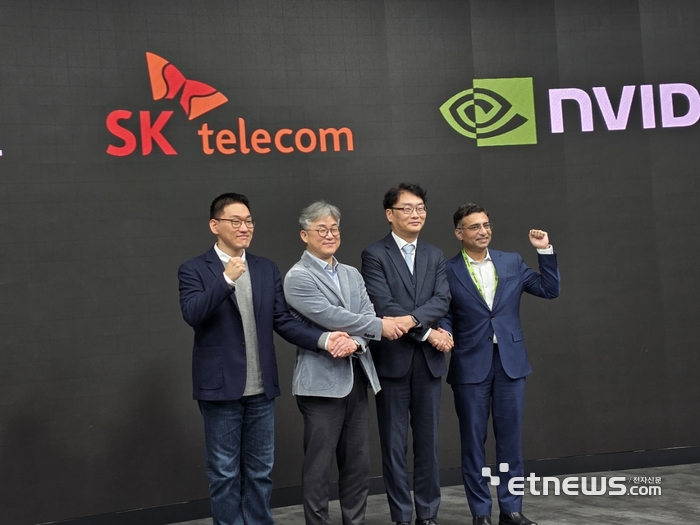
South Korea's neural processing unit (NPU) industry, which is pursuing technological cooperation with Nvidia, is also closely monitoring developments. Rebellions is working with Nvidia and SK Telecom to develop an integrated AI semiconductor system based on NVLink Fusion, while DEEPX is exploring heterogeneous computing partnerships that combine GPUs and NPUs.
However, as the AI inference market expands, the division of responsibilities between GPUs and NPUs is becoming increasingly important. Industry observers therefore expect the broader trend of technological cooperation to continue.
“Regardless of Jensen Huang's future as CEO, the division of responsibilities between GPUs and NPUs, with each leveraging its respective strengths in the era of physical AI, is an irreversible technological trend,” an industry official said.
Another variable is the United States' move to tighten semiconductor export controls against China. The controversy surrounding Huang has prompted growing calls in the U.S. Congress for stronger regulations to prevent advanced AI semiconductors from reaching China.
If the scope of the restrictions expands to include exports of advanced technologies, such as semiconductor manufacturing equipment, by U.S. allies, the measures could also place additional burdens on the facility operations and investments of Samsung Electronics and SK Hynix, both of which maintain production bases in China.