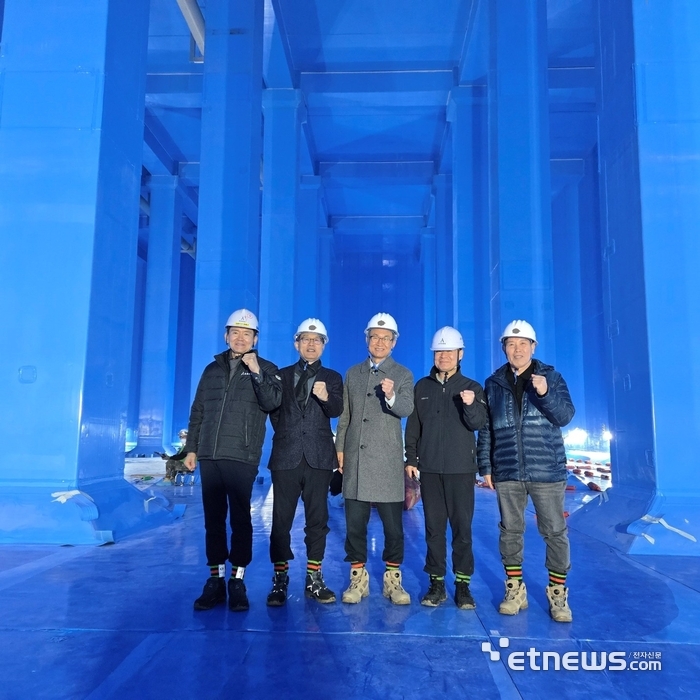







Ansen, a South Korean specialist in waterproofing materials, is poised for a major international breakthrough. Originally focused on water treatment plants, the company has expanded into high-tech sectors such as semiconductors and displays. Now, with its core technology incorporated into a new international standard, Ansen is set to accelerate its global expansion.
According to industry and academic sources on May 31, a new international standard for the waterproofing and protection of underground concrete structures, ISO/TS 18734, was established in January. The standard focuses on enhancing the long-term durability and environmental safety of concrete infrastructure.
◇ “K-Waterproofing” Becomes the Standard in 17 Countries
The new ISO standard incorporates several “K-Waterproofing” technologies widely used in Korea, including:
△ Factory-fabricated integrated waterproofing for structures.
△ Self-healing adhesive coatings and composite sheet systems.
△ Upside-bonding pre-applied waterproofing for underground floors and earth-retaining walls.
While the development was led by ISO TC 71/SC7, the inclusion of Korean technology is credited to a collaborative effort between academia and industry. Key figures include Dr. Kim Jung-il (Shield Tech), Professor Emeritus Oh Sang-keun (SeoulTech), and concrete expert Dr. Shin Soo-bong. As a result, South Korean waterproofing methods are now recognized across 17 member nations.
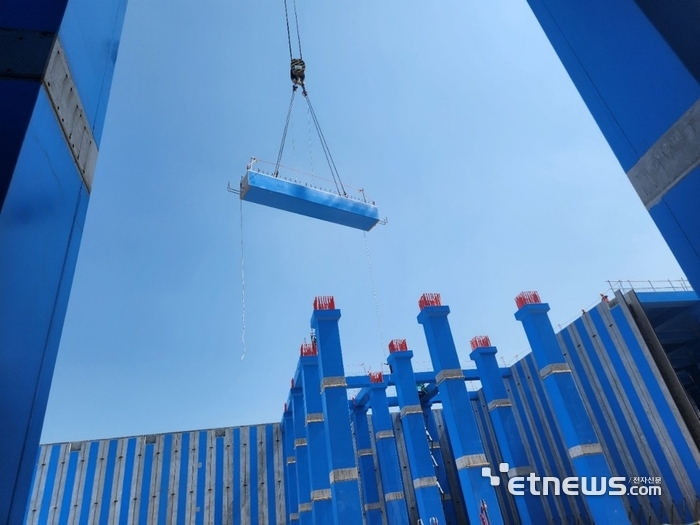
Ansen is drawing significant attention because it holds the proprietary technology for “factory-fabricated integrated waterproofing.” Unlike traditional methods, where waterproofing is applied on-site to a finished concrete structure, Ansen integrates a polypropylene (PP)-based polymer sheet directly into precast concrete (PC) during the manufacturing stage.
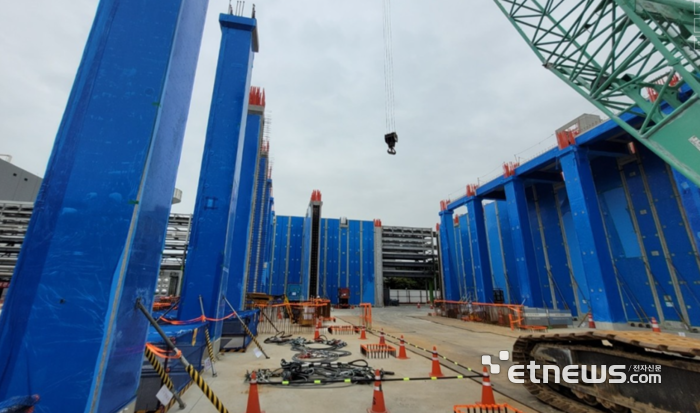
This off-site construction (OSC) approach ensures uniform quality, reduces human error, and significantly shortens construction timelines.
The technology is proving indispensable in the semiconductor industry. Semiconductor fabs require advanced anti-corrosion performance due to constant exposure to ultrapure water (UPW), hydrofluoric acid (HF), and chlorine. Traditional fiberglass-reinforced plastic (FRP) often sheds micro glass particles over time, which can contaminate cleanrooms.
In contrast, Ansen's non-fiberglass polymer sheets maintain structural stability even in harsh chemical environments, helping prevent contamination and protect yields. The system is already in operation at major facilities, including SK hynix's water and wastewater treatment plants.
◇ Accelerating Global Market Entry
International standards often serve as a gateway to market dominance. With the new ISO standard in place, Ansen is now optimally positioned to supply global projects. This comes at a timely moment, as South Korean chipmakers expand their manufacturing footprint in the United States, where large-scale water infrastructure is a prerequisite.
“In semiconductor manufacturing, traditional waterproofing materials often release glass dust that can compromise chip yields,” an Ansen official said. “By developing a system that integrates PP sheets directly into PC structures, we have resolved this bottleneck. With the new ISO standard, we expect our opportunities in overseas markets to grow significantly.”