








Clinical trials, a critical gateway to regulatory approval for new drugs and medical devices, are being transformed by artificial intelligence (AI). Clinical consulting firms are increasingly leveraging AI to support decision-making, develop regulatory strategies for AI-based medical devices, and expand treatment options in response to the growing complexity of the clinical landscape.
Clinical solutions provider Medidata on June 17 showcased examples of how AI is driving innovation in clinical trial operations at an event held at the GLAD Hotel in Yeongdeungpo-gu, Seoul.
Medidata, a subsidiary of Dassault Systemes, supplies clinical trial-focused software solutions to pharmaceutical and biotechnology companies as well as contract research organizations (CROs).
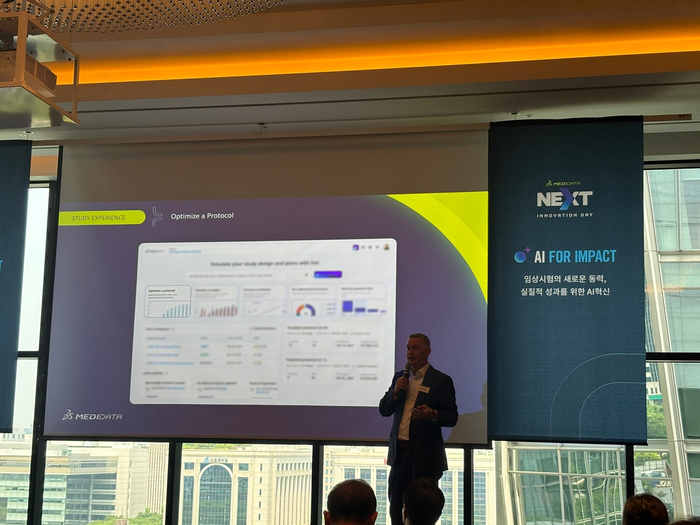
Medidata is using agentic AI to reduce the time and cost burdens associated with clinical trials. By entering a natural-language prompt such as, “Optimize the clinical trial I'm preparing,” users can receive recommendations on suitable trial models, research sites, and patient recruitment strategies tailored to their company's financial resources and development stage. For patients, a software application allows symptoms and other health information to be entered via a tablet, automatically transmitting the data to clinical research sites without the need for traditional questionnaires.
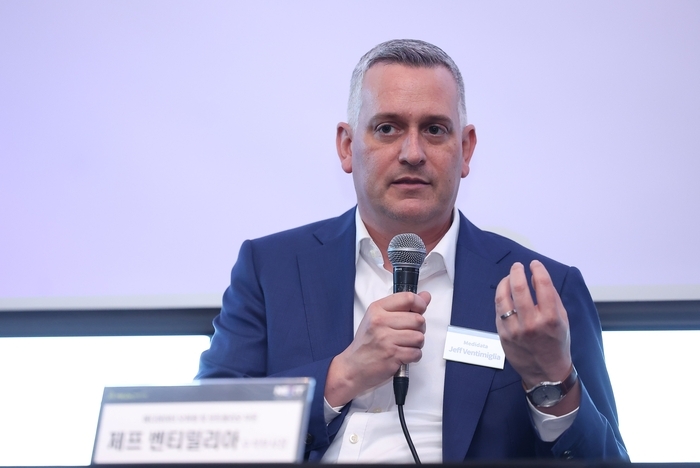
“Success in clinical trials depends on how quickly the right patients can be identified and enrolled to reduce time and costs,” said Jeff Ventimiglia, Senior Vice President at Medidata. “Within 18 months of introducing AI-powered clinical solutions, the number of clinical trials increased 3.8-fold, while patient enrollment rose 2.3-fold.”
Of the 38,000 clinical studies conducted through Medidata's platform over the past 25 years, approximately 7,600 have utilized AI. The company recently launched a new service called Dot, which enhances connectivity between patient and research data. By linking patient-reported information with study data, the platform helps researchers determine whether a trial is progressing positively or negatively, improving overall operational efficiency.
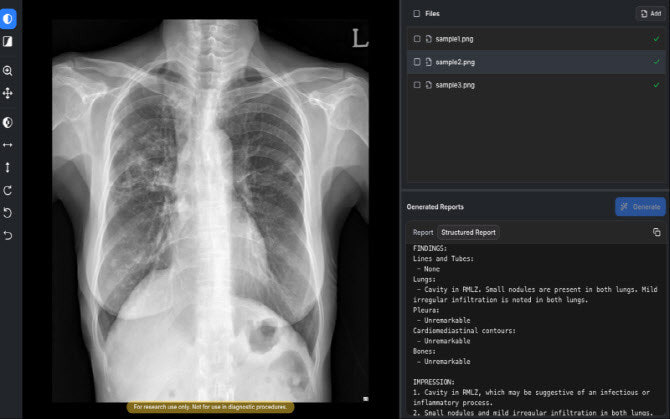
EverTry, a South Korean contract research organization (CRO), helped SumBit AI secure approval from the Ministry of Food and Drug Safety (MFDS) for its generative AI-powered chest X-ray preliminary reporting software, making it the first product of its kind to receive regulatory clearance in Korea. More than one-third of the country's approved digital therapeutics have also conducted clinical trials with EverTry's support.
Shin Jae-yong, CEO of EverTry, said the key to the approval was designing the clinical trial strategy to align with the regulator's requirements. SumBit AI initially believed its software could generate diagnostic reports for more than 200 diseases. However, the MFDS took the position that, because there was no precedent for approving a generative AI-based medical device, the accuracy of findings for each individual condition needed to be evaluated separately.
EverTry therefore proposed seeking approval for 57 findings that could clearly demonstrate the software's reporting performance. The strategy ultimately led to MFDS approval, allowing SumBit AI to become the first company in Korea to receive authorization for a generative AI-based medical device.
“Digital medical device developers must consider regulatory approval, reimbursement eligibility, and commercialization potential from the early stages of product development,” Shin said. “As a CRO, we help prepare the evidence required by regulators and design clinical studies that take into account cybersecurity, manufacturing certification, and the availability of qualified clinical sites.”
EverTry recently obtained ISO 13485 certification, the international quality management standard for medical devices. Building on this internationally recognized validation of its clinical capabilities, the company plans to expand CRO services for Korean firms seeking overseas market entry and foreign companies looking to conduct clinical trials in Korea, while supporting a broader range of digital healthcare device approvals.
