








Samsung Electronics said its Device eXperience (DX) division is likely to remain under pressure—and its Mobile eXperience (MX) business could stay in the red for the time being—as rising memory-chip prices erode profitability. The company plans to respond by expanding market share, improving its cost structure and preparing next year's flagship products.
Samsung also addressed frustration within DX over compensation gaps with the Device Solutions (DS) semiconductor division. The company indicated that additional cross-division compensation would be difficult, arguing that the two units have effectively operated as separate businesses.
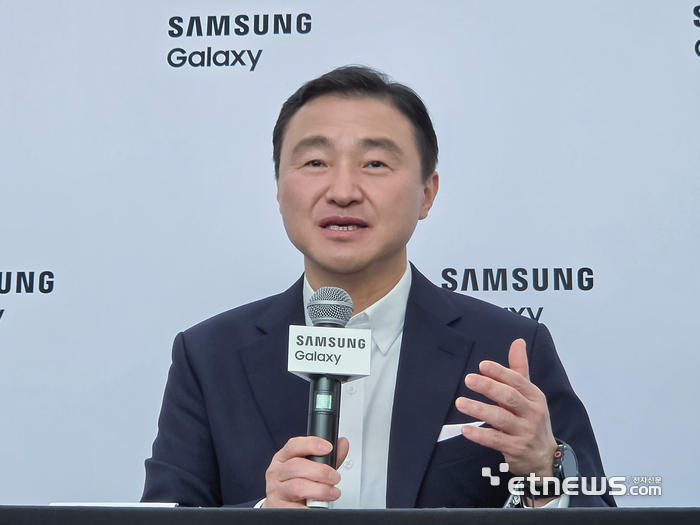
According to industry sources on Aug. 19, Samsung held a management briefing for employees at its R5 Mobile Research Center in Suwon. The session was led by Roh Tae-moon, president and head of the DX division.
Samsung said DX revenue rose about 2% year on year in the first half, but operating profit fell sharply as memory prices climbed to more than four times their level a year earlier. DX operating profit totaled 2.1 trillion KRW in the first half, just over a quarter of the 8 trillion KRW reported in the same period last year.
The company said the MX business, which oversees smartphones, is unlikely to return to profitability soon as long as memory prices remain elevated.
For the second half, Samsung outlined three priorities for DX: expanding market share, continuing structural improvements and preparing innovative products for next year.
The company plans to increase sales of the Galaxy S26 and Galaxy Z Fold8 series to gain market share. Samsung expects high component costs to affect competitors as well, creating an opportunity to strengthen its position while rivals raise prices or reduce shipment volumes. The strategy is to capture a larger share of the market now and benefit more when memory prices eventually normalize.
Samsung also explained the origins of its division-based operating structure in response to compensation concerns among DX employees.
The company said it began separating its finished-product business—now DX—from its component business, DS, in 2009. The move was intended to resolve an inherent conflict: customers for its semiconductor and display components could also compete with Samsung in consumer-device markets.
Samsung has not historically shared unused bonus pools from one division with another, even when one business unit generated excess performance-incentive funds, according to the company. It reiterated its performance-based compensation principle: rewards should follow the division that delivers results.
Meanwhile, Samsung Electronics' largest DX union, the Samsung Electronics Labor Union DongHaeng, plans to hold a large rally near Samsung's Seocho headquarters in Seoul on Aug. 21. The union expects about 3,000 participants.
Since a wage agreement was reached in May, the union has argued that the performance-compensation gap for DX employees has become excessive. It has called for a compensation plan that would provide DX employees with roughly 1,000 shares of Samsung Electronics stock per person.
