








Refurbished TVs without quality guarantees from domestic manufacturers are being imported back into the country.
Import companies are selling TVs produced at Samsung Electronics and LG Electronics' Mexican factories, among others, through major distribution channels after obtaining separate radio wave certifications without manufacturer certification. These include not only LCD TVs but also premium products like OLED TVs. Despite inadequate after-sales service (AS), they attract consumers with prices less than half the original.
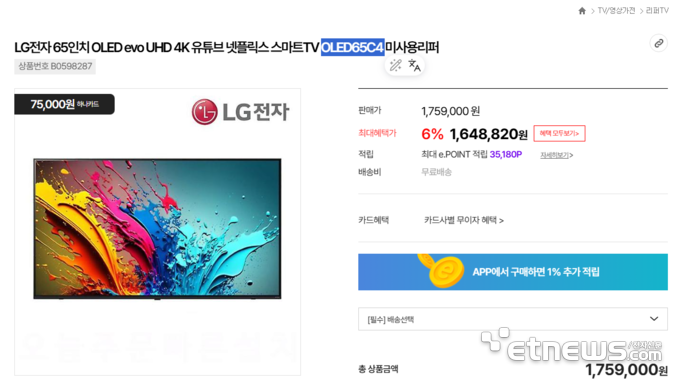
These “unused refurbished” TVs are being widely sold not only on major online platforms like Coupang and 11th Street but also through online malls such as Electronics Land and Lotte On. An LG Electronics Best Shop officially sells the OLED65C4 stand model for 3.77 million won, while an unused refurbished shop offers it for 1.64882 million won—51.4% cheaper.
These products present the manufacturer's official product descriptions, national agency certifications, and enrollment in product liability insurance services. However, in reality, they are third-party modified goods. The only mention is a brief note at the bottom of the product description stating they are “parallel-imported overseas products.”
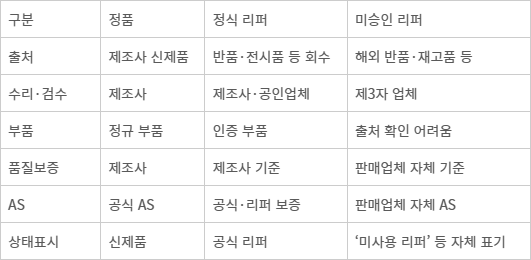
Refurbished products themselves are not inherently problematic. In global markets like Europe, the refurbished market has established a significant presence. However, the refurbished products currently sold domestically have not undergone any certification by the manufacturer. A small number of importers sell products they have self-modified, merely affixing the Samsung Electronics or LG Electronics brand labels.
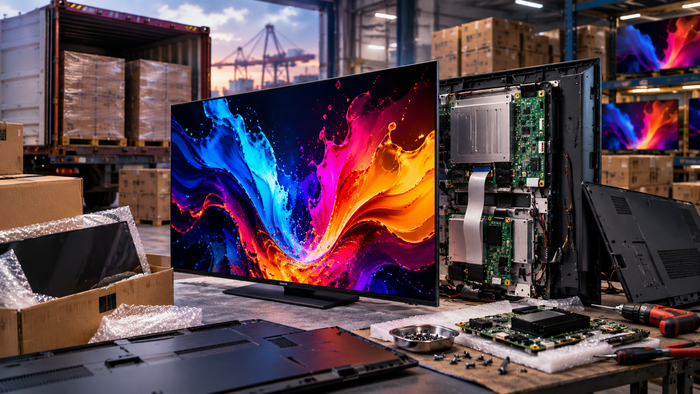
Most of the non-certified refurbished TVs sold domestically are reportedly purchased cheaply by importers from inventory stockpiled at Samsung or LG overseas factories due to returns, then resold after replacing parts with their own components. While these products are returned for reasons like “change of mind” or “box damage,” verifying their authenticity is impossible. Although sellers claim “new panel replacement” or “local modifications completed,” it is difficult to confirm how many key components have been replaced.
As a result, even if issues arise with the product, official after-sales service (AS) from the manufacturer cannot be obtained. Samsung and LG do not provide AS for products imported through such reverse channels. Consequently, the comment sections of sales reviews are filled with consumer complaints about quality.
A representative from Samsung and LG stated, “While these products may harm our brand value, the scale is not yet significant, and since they are not official products, we are not taking separate action at this stage.” However, they added, “There is sufficient grounds to raise issues regarding trademark rights.”
The key issue is the significant potential for the refurbished market to expand in the future. Refurbished products, once considered a low-cost used goods market primarily in Europe, are now being integrated into new business domains. Market research firm Coherent Market Insights estimates the global refurbished electronics market size at $68.2 billion (approximately 94 trillion KRW) this year, projecting it to grow to $136.4 billion by 2033—nearly doubling.
If the domestic refurbished market expands, the current informal distribution structure will inevitably undermine manufacturers' brand value and consumer trust. While manufacturers currently distance themselves by stating that refurbished products are not part of official distribution or after-sales service, as the market grows, consumers will inevitably struggle to distinguish between the brand visibility of Samsung Electronics or LG Electronics on the product and the actual entity responsible for quality assurance.
Industry experts note that in preparation for the refurbished market potentially entering the formal regulatory framework, clear standards must be established to distinguish product grades, repair histories, component origins, and the entities responsible for quality guarantees.
