








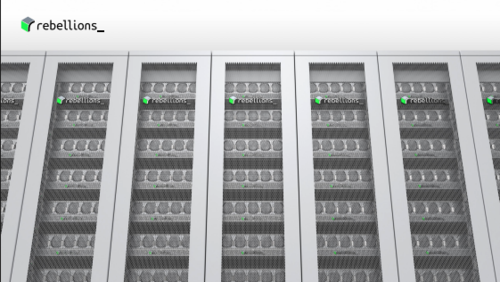
Rebellions is stepping up its push into Japan's AI infrastructure market through a partnership with AI technology company ai&, beginning with the deployment of its RebelRack AI inference systems at a data center in Tokyo.
The South Korean AI infrastructure company said on Sep. 15 that it will work with ai& to provide enterprises, government agencies and developers in Japan with access to locally deployed AI inference services. The partners plan to expand the deployment to 100 or more RebelRack units as ai& builds out its data center capacity.
The initiative is also aimed at Japan's growing demand for sovereign AI infrastructure, which emphasizes keeping AI computing capacity and data operations within the country. By installing the systems locally, Rebellions and ai& plan to offer Japan-based inference capacity to domestic customers.
ai& will initially deploy RebelRack at its Tokyo data center and scale the rollout alongside its broader expansion plans. The company has secured more than $2 billion in committed infrastructure capital, aims to have five data center sites in operation by the end of 2026, and is targeting 40 megawatts of total capacity by the end of 2027.
RebelRack is Rebellions' rack-scale AI inference platform, designed to simplify the deployment of large-scale inference infrastructure. It is built around the company's REBEL100 neural processing unit, or NPU, and is intended to provide power-efficient AI inference capacity within ai&'s heterogeneous computing environment.
Rather than relying solely on GPUs, ai& is building an infrastructure model that combines different types of accelerators according to workload requirements. Rebellions will provide low-power, high-efficiency systems optimized for AI inference, the process of running trained AI models to generate responses or carry out tasks.
Rebellions said its systems support open-source software environments commonly used in GPU-centered infrastructure, reducing the integration burden for customers. That compatibility is intended to allow ai& customers to use NPU-based inference services without moving to an entirely new development environment.
“The economics of inference directly determine how broadly AI can be deployed and used,” said Park Sung-hyun, co-founder and CEO of Rebellions. “By building Rebellions infrastructure in Japan, we have established a foundation for directly addressing demand from enterprises, government agencies and developers.”
David Bennett, co-founder and CEO of ai&, said heterogeneous infrastructure means using the right hardware for each workload. He said Rebellions' efficiency would expand the AI inference infrastructure options available to customers in Japan.
Rebellions recently raised $400 million in a pre-IPO funding round, bringing its cumulative funding to $850 million. The company currently ships AI infrastructure systems including RebelRack and RebelPOD.
The companies plan to use the Tokyo deployment as a starting point for expanding Rebellions' AI infrastructure into additional ai& data centers and other regions.
