






Samsung Electronics and LG Electronics are accelerating their transition to AI-driven manufacturing, fueling explosive growth at their robotic affiliates. Increased investments in smart factory upgrades are translating into surging captive-market revenue for Rainbow Robotics and Robostar, where the tech giants hold major stakes.
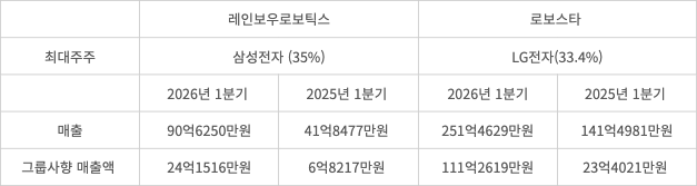
According to financial disclosures filed on May 31, first-quarter revenue for Rainbow Robotics (backed by Samsung) and Robostar (an LG subsidiary) climbed to 9.06 billion KRW and 25.15 billion KRW, respectively, marking a staggering year-over-year increase of 117% and 78%.
The primary growth engine is a wave of orders from within their respective groups. Robostar's revenue from LG Electronics reached 11.1 billion KRW in Q1--accounting for 44% of its total sales--a nearly fivefold increase from a year earlier. Rainbow Robotics likewise saw its Samsung-related revenue triple to 2.4 billion KRW, making up 27% of its quarterly top line.
The synergy centers on smart factory initiatives. LG is leveraging Robostar to enhance production efficiency through logistics equipment and transport robots. Notably, Robostar's smart factory division generated 8.9 billion KRW in Q1 alone, nearly half of its entire 2025 annual revenue for that segment, indicating that LG's push for advanced manufacturing is directly boosting the affiliate's growth.
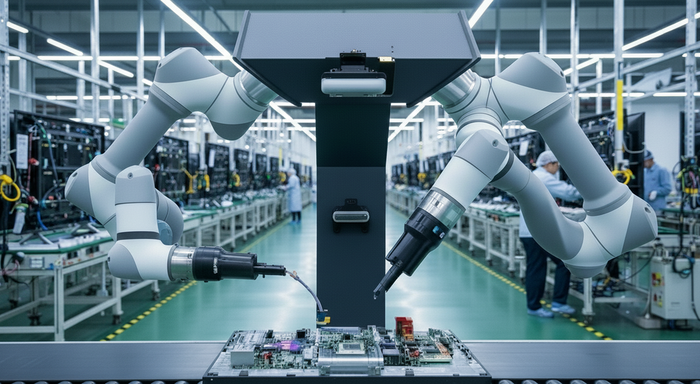
Samsung, for its part, is using Rainbow Robotics to internalize core automation capabilities. Since increasing its stake last year, Samsung has been rolling out Rainbow's collaborative robots, autonomous mobile robots (AMRs), and dual-arm robots across its global production and logistics networks. Robotics-related revenue now accounts for 87% of Rainbow's total sales, up 14 percentage points from a year earlier, underscoring its successful transformation into a dedicated robotics powerhouse.
“Major corporations are aggressively deploying robots to simultaneously raise production efficiency and ensure consistent quality,” an industry expert said. “The spike in captive revenue at these robotics firms shows that smart factory blueprints are now materializing into large-scale, tangible orders.”